Course description

This comprehensive learning journey is designed for consultants who want to master both the core and advanced capabilities of SAP Platform. Participants will learn how to configure platform settings, manage permissions and security, administer employee data, customize user experiences, leverage Metadata Framework (MDF), implement business rules, and utilize advanced tools such as Talent Intelligence Hub and Opportunity Marketplace.

By the end of this training, learners will have the practical knowledge and configuration skills required to successfully implement, administer, and optimize SAP Platform environments while supporting business transformation initiatives.

What will i learn?

  • SAP SuccessFactors Platform Administration
  • Role-Based Permissions (RBP)
  • Metadata Framework (MDF)
  • Business Rules Configuration
  • People Profile Management
  • Talent Intelligence Hub Configuration
  • Opportunity Marketplace Implementation
  • Job Architecture Frameworks
  • Data Privacy and Compliance
  • Advanced Platform Administration
  • Metadata Framework (MDF)
  • Business Rules Configuration
  • People Profile Management
  • Talent Intelligence Hub Configuration
  • Opportunity Marketplace Implementation
  • Job Architecture Frameworks
  • Data Privacy and Compliance
  • Advanced Platform Administration

Requirements

  • SAP SuccessFactors Platform and its core administrative capabilities

Frequently asked question

This training is ideal for:
  • SAP SuccessFactors Consultants
  • HR Technology Consultants
  • HCM Solution Architects
  • SAP Administrators
  • HRIS Professionals
  • Implementation Consultants
  • Employee Experience Specialists
  • Digital HR Transformation Teams

  • Chapter 01
    Introducing SAP

    Gain an understanding of SAP SuccessFactors, its cloud-based architecture, modules, and role within modern Human Experience Management strategies.

  • Chapter 02
    Setting Up SAP Provisioning

    Learn how provisioning supports implementation activities, environment setup, feature activation, and system configuration.

  • Chapter 03
    Describing SAP Administrator and Admin Center

    Explore the Administration Center and understand the tools available to configure, maintain, and monitor system operations.

  • Chapter 04
    Setting Up Permissions and System-wide Features in SAP
    Understand Role-Based Permissions (RBP), security models, access control, and global system settings that ensure governance and compliance.
  • Chapter 05
    Performing Administrator Tasks in SAP

    Learn how administrators manage users, data imports, configurations, monitoring, and ongoing platform maintenance.

  • Chapter 06
    Configuring the User Experience in SAP

    Discover how to personalize the employee experience through homepage customization, navigation settings, branding, and user interface enhancements.

  • Chapter 07
    People Profile in SAP

    Learn how employee profiles are structured and configured to provide a centralized view of workforce information.

  • Chapter 08
    Defining MDF and Business Rules in SAP

    Explore Metadata Framework (MDF), object creation, business rules, workflow automation, and data management best practices.

  • Chapter 09
    Succeeding as a Consultant

    Gain practical consulting insights, implementation best practices, project methodologies, and customer engagement strategies.

  • Chapter 10
    Course Description

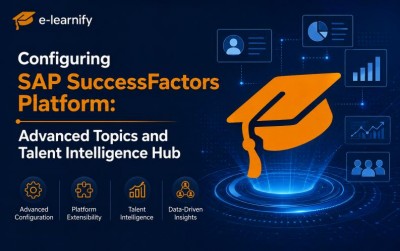
    This advanced course explores the powerful capabilities available within SAP SuccessFactors Platform beyond foundational administration. Learners will gain expertise in advanced platform configuration, talent intelligence capabilities, job architecture frameworks, system management, document handling, privacy compliance, and accessibility standards.

    The course also introduces Talent Intelligence Hub and Opportunity Marketplace, helping organizations create skills-based talent strategies and internal mobility programs.

    Summary:

    What You Will Learn

    Upon completion of this course, you will be able to:

    ·         Configure advanced SAP SuccessFactors Platform features.

    ·         Manage sophisticated data model configurations.

    ·         Administer user information and organizational structures.

    ·         Implement Job Architecture and Skills Frameworks.

    ·         Utilize Talent Intelligence Hub effectively.

    ·         Configure Opportunity Marketplace capabilities.

    ·         Manage platform environments and system instances.

    Support privacy, compliance, and accessibility requirements.

  • Chapter 01
    Practical Exercise Overview

    This practical workshop provides learners with access to a pre-configured SAP SuccessFactors environment where they can apply concepts learned throughout the Introduction Academy.

    Participants will perform real-world administrative tasks, configure system settings, manage permissions, create MDF objects, and gain confidence working within the SuccessFactors Platform.

  • Chapter 02
    Practical Activities Include
    • System navigation exercises
    • Provisioning and setup activities
    • Permission configuration
    • Homepage customization
    • People Profile configuration
    • MDF object creation
    • Business rule implementation
    • User administration tasks

  • Chapter 01
    Course Description

    This course provides a comprehensive introduction to SAP SuccessFactors Platform and its core administrative capabilities. Learners will gain hands-on knowledge of the tools, configurations, and foundational components required to support and manage a SuccessFactors environment effectively. The course focuses on platform administration, role-based permissions, employee profiles, user experience configuration, Metadata Framework (MDF), and business rules that form the backbone of SAP SuccessFactors implementations.

    Summary:

    What You Will Learn

    After completing this course, you will be able to:

    • Understand the architecture and core components of SAP SuccessFactors.
    • Configure system-wide settings and administrative tools.
    • Manage Role-Based Permissions (RBP) and user security.
    • Customize the homepage and employee experience.
    • Configure People Profile and employee data structures.
    • Create and manage MDF objects and business rules.
    • Perform common administrative and consultant activities.
  • Chapter 02
    UNIT 1: Introducing Advanced Platform Topics
    Explore advanced platform capabilities, configuration options, and implementation considerations.
  • Chapter 03
    UNIT 2: Understanding Advanced Succession Data Model Topics

    Learn advanced data model concepts, configuration structures, and best practices for supporting complex business requirements.

  • Chapter 04
    UNIT 3: Managing User Information
    Understand employee data management, user lifecycle processes, and governance controls.
  • Chapter 05
    UNIT 4: Describing Job Architecture and Capabilities Frameworks
    Explore job structures, competencies, skills frameworks, and talent architecture strategies.
  • Chapter 06
    UNIT 5: Using Talent Intelligence Hub in SAP

    Learn how Talent Intelligence Hub enables skills-based workforce planning, talent development, and intelligent talent recommendations.

  • Chapter 07
    UNIT 6: Using Opportunity Marketplace in SAP

    Discover how Opportunity Marketplace helps employees explore internal career opportunities, learning initiatives, mentoring programs, and project assignments.

  • Chapter 08
    UNIT 7: Managing Instances in SAP

    Understand instance management, environment maintenance, testing strategies, and deployment best practices.

  • Chapter 09
    UNIT 8: Using Advanced Administrator Features in SAP

    Explore advanced administration tools, troubleshooting techniques, monitoring capabilities, and optimization strategies.

  • Chapter 10
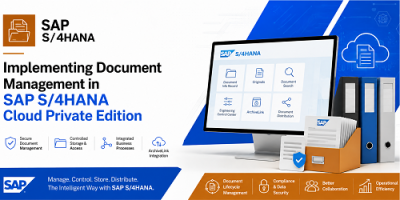
    UNIT 9: Using Document Management and Attachment Storage in SAP

    Learn how documents, attachments, and employee records are securely managed within the platform.

  • Chapter 11
    UNIT 10: Understanding Data Protection and Privacy

    Review privacy regulations, compliance standards, and data protection best practices within SAP.

  • Chapter 12
    UNIT 11: Understanding Accessibility in SAP

    Explore accessibility features and standards that ensure inclusive user experiences for all employees.

  • Chapter 13
    UNIT 12: Succeeding as a Consultant

    Develop advanced consulting skills, customer advisory techniques, implementation methodologies, and solution optimization strategies.

  • Chapter 01
    Practical Exercise Overview

    This advanced practical workshop allows learners to apply advanced platform configurations and Talent Intelligence Hub concepts within a guided SAP environment.

    Participants will work through realistic implementation scenarios and gain practical experience configuring advanced features commonly used in enterprise deployments.

  • Chapter 02
    Practical Activities Include
    • Advanced platform configuration
    • Data model management
    • Job Architecture setup
    • Talent Intelligence Hub exercises
    • Opportunity Marketplace configuration
    • Instance administration
    • Document management activities
    • Privacy and compliance configuration
    • Advanced troubleshooting scenarios

Jittesh Purrohit

Lectures

27

Skill level

Advanced

Expiry period

Lifetime

Related courses