Course description

SAP S/4HANA Cloud, Private Edition for Service enables organizations to streamline and modernize service management by integrating customer service operations, field service, repair management, service contracts, recurring services, and analytics into a unified digital platform. It empowers businesses to deliver exceptional customer experiences while improving operational efficiency, service quality, and profitability.

The Implementing SAP S/4HANA Cloud, Private Edition for Service course is designed for SAP Service Consultants, SAP Functional Consultants, Customer Service Managers, Service Operations Professionals, ERP Consultants, and implementation specialists who want to develop expertise in SAP S/4HANA Service and prepare for enterprise implementation projects and SAP certification.

Throughout this comprehensive training program, learners will gain practical knowledge of SAP S/4HANA Service architecture, service business processes, organizational structures, master data configuration, interaction center, service order management, in-house repairs, recurring services, service contracts, analytics, and implementation methodologies using SAP S/4HANA Cloud Private Edition.

By the end of this course, participants will be able to configure, customize, implement, and support SAP S/4HANA Service solutions while integrating service management with Logistics, Controlling, Cross-Application Time Sheet (CATS), and other SAP business processes.

The learning journey is structured around service discovery, business processes, organizational and master data configuration, basic customizing, and RISE with SAP Methodology, preparing learners for real-world SAP Service implementations.

Customer service has become one of the most important competitive differentiators for modern organizations. SAP S/4HANA Service enables businesses to manage the complete service lifecycle---from customer interactions and service requests to field service execution, in-house repairs, service contracts, recurring services, and performance analytics.

This comprehensive course introduces learners to the complete SAP S/4HANA Service solution available in both Public and Private Cloud Editions. Participants will explore service processing, organizational structures, master data management, interaction center operations, service order management, advanced execution, repair processing, service contracts, recurring services, analytics, and implementation best practices.

The course combines functional business knowledge with practical SAP configuration skills, enabling learners to understand how SAP Service integrates with Logistics, Finance, Controlling, and enterprise service management processes.

By completing this training, professionals will be prepared to participate in SAP Service implementation projects, configure service business processes, support production environments, and pursue SAP Service certification.

The curriculum consists of five comprehensive modules covering SAP S/4HANA Service, Business Processes, Organizational Configuration, Service Customizing, and RISE with SAP Methodology.

Who Should Attend

  • SAP S/4HANA Service Consultants
  • SAP Functional Consultants
  • SAP CRM Consultants
  • SAP Customer Service (CS) Consultants
  • ERP Consultants
  • Service Operations Managers
  • Customer Service Managers
  • Field Service Managers
  • Business Process Consultants
  • SAP Implementation Consultants
  • Technical Support Consultants
  • Business Analysts
  • Project Managers
  • Digital Transformation Professionals
  • Professionals preparing for SAP S/4HANA Service Certification

Skills You Will Gain

  • SAP S/4HANA Service Configuration
  • Service Order Management
  • Interaction Center Operations
  • Service Contracts & Recurring Services
  • In-House Repair & Advanced Execution
  • Service Analytics & Reporting
  • SAP Cloud Service Implementation

Career Opportunities

  • SAP S/4HANA Service Consultant
  • SAP Customer Service (CS) Consultant
  • SAP Functional Consultant
  • SAP CRM Consultant
  • SAP Service Implementation Consultant
  • Field Service Consultant
  • Service Operations Manager
  • Customer Experience Consultant
  • ERP Functional Consultant
  • SAP Solution Architect (Service)
  • SAP Support Consultant
  • Digital Transformation Consultant

Certification Preparation

This course prepares learners for SAP S/4HANA Service certification by providing practical knowledge of:

  • SAP S/4HANA Service Overview
  • Service Processing
  • Organizational Structure
  • Master Data Configuration
  • Interaction Center
  • Service Order Management
  • In-House Repairs
  • Service Contracts
  • Recurring Services
  • Service Analytics
  • Basic Service Customizing
  • RISE with SAP Methodology

The curriculum is designed for business users and implementation consultants who want to understand, configure, and implement SAP S/4HANA Service in Cloud Private Edition environments.


What will i learn?

  • Understand the architecture and capabilities of SAP S/4HANA Service in both Public and Private Cloud Editions.
  • Identify SAP solutions for end-to-end service processing.
  • Configure organizational structures and master data for SAP S/4HANA Service.
  • Manage customer interactions using the SAP Interaction Center.
  • Configure and execute Service Order Management processes.
  • Implement On-Site Service, In-House Repair, and Advanced Service Execution.
  • Configure Service Contracts and Recurring Service processes.
  • Integrate SAP S/4HANA Service with Logistics, Controlling, and Cross-Application Time Sheet (CATS).
  • Analyze service operations using SAP S/4HANA Analytics.
  • Perform basic service customizing and implementation activities.
  • Apply SAP Activate and RISE with SAP Methodology during implementation projects.
  • Support SAP S/4HANA Cloud Private Edition Service implementation and production support.

Requirements

  • Basic understanding of customer service and service management concepts.
  • Familiarity with enterprise business processes.
  • Basic knowledge of SAP ERP or SAP S/4HANA is beneficial.
  • Understanding of logistics and business operations is an advantage.
  • Basic computer skills and ERP navigation.
  • Interest in SAP Service Management and digital transformation.

Frequently asked question

SAP S/4HANA Service is an enterprise service management solution that enables organizations to manage customer interactions, service orders, repairs, contracts, recurring services, and analytics in both Public and Private Cloud Editions.

This course is designed for SAP consultants, ERP professionals, customer service managers, field service professionals, business analysts, implementation consultants, and individuals preparing for SAP Service certification.

No. Prior SAP Service experience is not mandatory. Basic knowledge of ERP systems and business processes is recommended to better understand the concepts covered throughout the course.

Yes. The curriculum includes Interaction Center, Service Order Management, Additional Service Processes, In-House Repairs, Service Contracts, Recurring Services, and Service Analytics.

Yes. The course includes detailed coverage of Service Contracts, Recurring Service management, contract processing, and related business processes.

Yes. Learners will configure organizational structures, master data, service processing, on-site service, in-house repairs, service contracts, and system integration with Logistics, Controlling, and CATS.

Yes. The course includes RISE with SAP Methodology, SAP Activate tools, implementation phases, methodology components, dashboards, and customer implementation concepts.

After completing this course, learners can pursue careers as an SAP S/4HANA Service Consultant, SAP Customer Service Consultant, SAP Functional Consultant, SAP Service Implementation Consultant, ERP Consultant, Field Service Consultant, Customer Experience Consultant, or SAP Solution Architect specializing in Service Management.

  • Lesson 01
    Module 3: Configuring Organizational Structures and Master Data in SAP S/4HANA Service - Overview

    A well-defined organizational structure and properly maintained master data are essential for successful SAP S/4HANA Service implementations. Organizational elements determine how service operations are managed, while master data provides the foundation for service execution, scheduling, repairs, contracts, analytics, and reporting.

    This module introduces the configuration of organizational structures, master data, products, technical assets, measuring points, and counters required for SAP S/4HANA Service. Learners will understand how these foundational elements support efficient service processing and seamless integration with enterprise business processes.

    By the end of this module, participants will be able to configure organizational structures, maintain service master data, manage technical assets, and prepare SAP S/4HANA Service for real-world implementation projects.

    According to the learning journey, this module covers creating organizational data, organizational master data, products and product bundles, technical assets, and measuring points and counters.

    What You Will Learn

    • Configure organizational structures.
    • Create organizational master data.
    • Manage products and product bundles.
    • Configure technical assets.
    • Maintain measuring points and counters.
    • Prepare master data for service operations.
    • Support SAP S/4HANA Service implementation.
  • Lesson 02
    Unit 1: Creating Organizational Data

    Organizational data establishes the operational framework required for service management. It defines service organizations, business units, responsibilities, reporting relationships, and service execution structures that support efficient customer service operations.

    This unit introduces organizational hierarchy creation, service organizations, business units, organizational assignments, and implementation best practices.

    Key Topics

    • Organizational Data
    • Service Organization
    • Business Units
    • Organizational Hierarchy
    • Service Teams
    • Organizational Assignment
    • Enterprise Structure
    • SAP Configuration
  • Lesson 03
    Unit 2: Creating Master Data for Organizational Elements

    Master data provides consistent business information that supports service processing, planning, execution, reporting, and analytics. Properly configured master data ensures efficient business operations and accurate reporting across SAP S/4HANA Service.

    This unit explains Business Partners, organizational master records, service employees, organizational assignments, and master data maintenance.

    Key Topics

    • Master Data
    • Business Partners
    • Organizational Elements
    • Service Employees
    • Organizational Assignment
    • Data Maintenance
    • Service Configuration
    • SAP Master Data
  • Lesson 04
    Unit 3: Creating Products and Product Bundles

    Products and Product Bundles define the goods and services offered to customers during service operations. Proper product configuration enables accurate pricing, service execution, spare parts management, and contract administration.

    This unit introduces product master data, service products, bundled offerings, product hierarchies, and pricing integration.

    Key Topics

    • Products
    • Product Bundles
    • Service Products
    • Product Hierarchies
    • Spare Parts
    • Product Configuration
    • Pricing
    • SAP Product Master
  • Lesson 05
    Unit 4: Configuring Technical Assets

    Technical Assets represent customer equipment and assets that require installation, maintenance, repair, or inspection. Proper asset configuration supports service planning, maintenance history, warranty tracking, and equipment lifecycle management.

    This unit explains technical objects, equipment master records, functional locations, asset configuration, and lifecycle management.

    Key Topics

    • Technical Assets
    • Equipment
    • Functional Locations
    • Asset Configuration
    • Equipment Master
    • Warranty Management
    • Asset Lifecycle
    • SAP Asset Management
  • Lesson 06
    Unit 5: Configuring Measuring Points and Counters

    Measuring Points and Counters enable organizations to monitor equipment performance, operating conditions, and maintenance intervals. They support preventive maintenance, condition-based servicing, and accurate maintenance planning.

    This unit introduces measuring points, counters, meter readings, maintenance thresholds, and equipment monitoring.

    Key Topics

    • Measuring Points
    • Counters
    • Meter Readings
    • Equipment Monitoring
    • Preventive Maintenance
    • Maintenance Planning
    • Technical Objects
    • SAP S/4HANA
  • Lesson 07
    Module 3 Summary

    After completing this module, learners will understand how to configure organizational structures, maintain master data, create products and product bundles, manage technical assets, configure measuring points and counters, and establish the foundation required for SAP S/4HANA Service implementations.

  • Lesson 01
    Module 4: Performing Basic Customizing for Service in SAP S/4HANA and SAP S/4HANA Cloud Private Edition - Overview

    Basic Customizing enables organizations to tailor SAP S/4HANA Service to their specific business requirements while leveraging SAP Best Practices. Through configuration, organizations can automate service processes, standardize business operations, improve customer service, and integrate service management with other SAP business applications.

    This module introduces the fundamental customization activities required for SAP S/4HANA Service in both SAP S/4HANA and SAP S/4HANA Cloud Private Edition. Learners will configure service processing, general service settings, on-site service, in-house repairs, service contracts, technical architecture, and user interface components.

    By the end of this module, participants will be able to perform the essential customization activities necessary for implementing SAP S/4HANA Service in enterprise environments.

    According to the learning journey, this module covers service processing configuration, general settings, on-site service, in-house repair, service contracts, technical architecture, and user interface configuration.

    What You Will Learn

    • Configure SAP Service processing.
    • Perform general service customization.
    • Configure on-site service operations.
    • Configure in-house repair processes.
    • Configure service contracts.
    • Understand SAP Service technical architecture.
    • Configure user interface settings.
  • Lesson 02
    Unit 1: Configuring Service Processing

    Service Processing configuration defines how service requests, service orders, quotations, confirmations, billing, and follow-up activities are managed within SAP S/4HANA Service. Proper configuration ensures standardized service execution across the organization.

    This unit introduces service document types, processing rules, status management, workflow configuration, and service execution settings.

    Key Topics

    • Service Processing
    • Service Requests
    • Service Orders
    • Status Management
    • Service Documents
    • Workflow Configuration
    • Business Rules
    • SAP S/4HANA Service
  • Lesson 03
    Unit 2: Performing General Configuration

    General Configuration establishes the core settings required for SAP S/4HANA Service, including number ranges, organizational assignments, business functions, master data integration, and cross-functional settings that support enterprise-wide service operations.

    This unit explains system-wide configuration options, service control parameters, integration settings, and implementation best practices.

    Key Topics

    • General Configuration
    • Number Ranges
    • Organizational Assignments
    • Business Functions
    • System Parameters
    • Master Data Integration
    • Configuration Settings
    • SAP Customizing
  • Lesson 04
    Unit 3: Configuring On-Site Service

    On-Site Service enables organizations to schedule and manage field service activities at customer locations. SAP S/4HANA Service supports technician assignments, scheduling, travel planning, service confirmations, and customer communication throughout the service lifecycle.

    This unit introduces on-site service configuration, scheduling, technician management, dispatching, and service execution processes.

    Key Topics

    • On-Site Service
    • Field Service
    • Scheduling
    • Dispatching
    • Technician Assignment
    • Service Confirmation
    • Customer Visits
    • SAP Service
  • Lesson 05
    Unit 4: Configuring In-House Repair

    In-House Repair supports the complete repair lifecycle for customer-owned equipment returned to service centers. SAP S/4HANA Service enables inspection, repair execution, spare parts management, quality control, and return delivery through integrated repair processes.

    This unit explains repair order configuration, inspection procedures, repair processing, spare parts integration, and quality management.

    Key Topics

    • In-House Repair
    • Repair Orders
    • Equipment Inspection
    • Spare Parts
    • Repair Processing
    • Quality Control
    • Return Delivery
    • SAP Repair Management
  • Lesson 06
    Unit 5: Configuring Service Contracts

    Service Contracts define long-term agreements that specify the services an organization provides to customers. These contracts include service levels, coverage periods, billing rules, renewals, and recurring services that help improve customer satisfaction and operational efficiency.

    This unit introduces service contract configuration, contract types, service level agreements (SLAs), renewals, recurring services, and billing integration.

    Key Topics

    • Service Contracts
    • Contract Types
    • Service Level Agreements (SLAs)
    • Contract Renewal
    • Recurring Services
    • Coverage Periods
    • Billing Integration
    • SAP Contract Management
  • Lesson 07
    Unit 6: Configuring Technical Architecture and User Interface

    A well-designed technical architecture and user interface ensure that SAP S/4HANA Service operates efficiently while providing an intuitive experience for service representatives, dispatchers, technicians, and managers. Proper configuration improves productivity, usability, and system performance.

    This unit explains SAP technical architecture, SAP Fiori applications, user roles, authorization concepts, launchpad configuration, and user interface personalization.

    Key Topics

    • Technical Architecture
    • SAP Fiori
    • SAP Launchpad
    • User Roles
    • Authorizations
    • User Interface
    • Personalization
    • SAP S/4HANA
  • Lesson 08
    Module 4 Summary

    After completing this module, learners will understand how to configure SAP S/4HANA Service processing, perform general customization, configure on-site service, implement in-house repair processes, manage service contracts, and configure the technical architecture and SAP Fiori user interface.

  • Lesson 01 00:00:00
    Module 3 Overview

    A well-defined organizational structure and properly maintained master data are essential for successful SAP S/4HANA Service implementations. Organizational elements determine how service operations are managed, while master data provides the foundation for service execution, scheduling, repairs, contracts, analytics, and reporting.

    This module introduces the configuration of organizational structures, master data, products, technical assets, measuring points, and counters required for SAP S/4HANA Service. Learners will understand how these foundational elements support efficient service processing and seamless integration with enterprise business processes.

    By the end of this module, participants will be able to configure organizational structures, maintain service master data, manage technical assets, and prepare SAP S/4HANA Service for real-world implementation projects.

    According to the learning journey, this module covers creating organizational data, organizational master data, products and product bundles, technical assets, and measuring points and counters.

    What You Will Learn

    • Configure organizational structures.
    • Create organizational master data.
    • Manage products and product bundles.
    • Configure technical assets.
    • Maintain measuring points and counters.
    • Prepare master data for service operations.
    • Support SAP S/4HANA Service implementation.

    Units in This Module

    • Unit 3.1: Creating Organizational Data
    • Unit 3.2: Creating Master Data for Organizational Elements
    • Unit 3.3: Creating Products and Product Bundles
    • Unit 3.4: Configuring Technical Assets
    • Unit 3.5: Configuring Measuring Points and Counters
  • Lesson 02 00:00:00
    3.1 Creating Organizational Data

    Organizational data establishes the operational framework required for service management. It defines service organizations, business units, responsibilities, reporting relationships, and service execution structures that support efficient customer service operations.

    This unit introduces organizational hierarchy creation, service organizations, business units, organizational assignments, and implementation best practices.

    Key Topics

    • Organizational Data
    • Service Organization
    • Business Units
    • Organizational Hierarchy
    • Service Teams
    • Organizational Assignment
    • Enterprise Structure
    • SAP Configuration
  • Lesson 03 00:00:00
    3.2 Creating Master Data for Organizational Elements

    Master data provides consistent business information that supports service processing, planning, execution, reporting, and analytics. Properly configured master data ensures efficient business operations and accurate reporting across SAP S/4HANA Service.

    This unit explains Business Partners, organizational master records, service employees, organizational assignments, and master data maintenance.

    Key Topics

    • Master Data
    • Business Partners
    • Organizational Elements
    • Service Employees
    • Organizational Assignment
    • Data Maintenance
    • Service Configuration
    • SAP Master Data
  • Lesson 04 00:00:00
    3.3 Creating Products and Product Bundles

    Products and Product Bundles define the goods and services offered to customers during service operations. Proper product configuration enables accurate pricing, service execution, spare parts management, and contract administration.

    This unit introduces product master data, service products, bundled offerings, product hierarchies, and pricing integration.

    Key Topics

    • Products
    • Product Bundles
    • Service Products
    • Product Hierarchies
    • Spare Parts
    • Product Configuration
    • Pricing
    • SAP Product Master
  • Lesson 05 00:00:00
    3.4 Configuring Technical Assets

    Technical Assets represent customer equipment and assets that require installation, maintenance, repair, or inspection. Proper asset configuration supports service planning, maintenance history, warranty tracking, and equipment lifecycle management.

    This unit explains technical objects, equipment master records, functional locations, asset configuration, and lifecycle management.

    Key Topics

    • Technical Assets
    • Equipment
    • Functional Locations
    • Asset Configuration
    • Equipment Master
    • Warranty Management
    • Asset Lifecycle
    • SAP Asset Management
  • Lesson 06 00:00:00
    3.5 Configuring Measuring Points and Counters

    Measuring Points and Counters enable organizations to monitor equipment performance, operating conditions, and maintenance intervals. They support preventive maintenance, condition-based servicing, and accurate maintenance planning.

    This unit introduces measuring points, counters, meter readings, maintenance thresholds, and equipment monitoring.

    Key Topics

    • Measuring Points
    • Counters
    • Meter Readings
    • Equipment Monitoring
    • Preventive Maintenance
    • Maintenance Planning
    • Technical Objects
    • SAP S/4HANA

  • Lesson 01
    Module 5: RISE with SAP Methodology - Overview

    RISE with SAP provides a comprehensive business transformation framework that helps organizations accelerate the implementation of SAP S/4HANA Cloud while simplifying system deployment, business process optimization, and cloud operations. Combined with the SAP Activate methodology, it enables organizations to adopt industry best practices and implement SAP solutions using an agile, standardized approach.

    This module introduces the RISE with SAP Methodology for SAP S/4HANA Service implementations. Learners will explore SAP Activate, implementation tools, dashboards, customer implementation strategies, Fit-to-Standard workshops, and implementation best practices required for successful SAP S/4HANA Cloud Private Edition Service projects.

    By the end of this module, participants will understand the complete SAP implementation lifecycle and be prepared to contribute effectively to SAP Service implementation and digital transformation projects.

    According to the learning journey, this module covers RISE with SAP Methodology, SAP Activate, implementation tools, dashboards, customer implementation, and Fit-to-Standard workshops.

    What You Will Learn

    • Understand the RISE with SAP methodology.
    • Explain SAP Activate implementation phases.
    • Use SAP implementation tools and dashboards.
    • Support customer implementation projects.
    • Conduct Fit-to-Standard workshops.
    • Apply SAP Best Practices.
    • Participate in SAP S/4HANA Service implementation projects.
  • Lesson 02
    Unit 1: Understanding RISE with SAP

    RISE with SAP provides organizations with a complete cloud transformation offering that combines SAP S/4HANA Cloud, infrastructure, business process intelligence, implementation services, and lifecycle management. It enables organizations to modernize service operations while reducing implementation complexity.

    This unit introduces the architecture, components, business benefits, and implementation approach of RISE with SAP.

    Key Topics

    • RISE with SAP
    • Intelligent Enterprise
    • Digital Transformation
    • Cloud ERP
    • Business Process Intelligence
    • SAP S/4HANA Cloud
    • Enterprise Modernization
    • SAP Best Practices
  • Lesson 03
    Unit 2: Understanding SAP Activate

    SAP Activate is SAP's implementation methodology that combines agile project management, guided configuration, SAP Best Practices, and implementation accelerators. It enables organizations to rapidly deploy SAP S/4HANA solutions while reducing project risks.

    This unit explains the SAP Activate roadmap, implementation phases, project governance, agile implementation methodology, and deliverables.

    Key Topics

    • SAP Activate
    • Discover Phase
    • Prepare Phase
    • Explore Phase
    • Realize Phase
    • Deploy Phase
    • Run Phase
    • Agile Project Management
  • Lesson 04
    Unit 3: Working with Implementation Tools and Dashboards

    SAP provides implementation tools and dashboards that simplify project planning, configuration, monitoring, testing, and deployment. These tools help project teams track implementation progress, manage project activities, and ensure successful delivery.

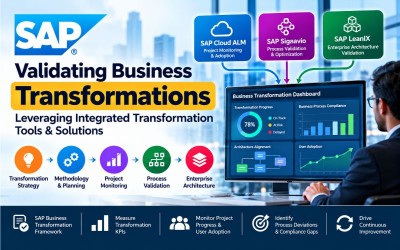
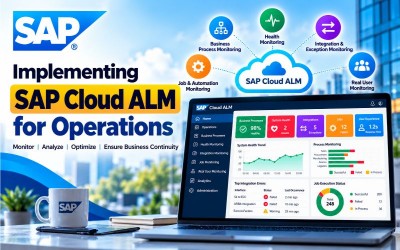
    This unit introduces implementation tools, project dashboards, guided configuration, SAP Cloud ALM, project monitoring, and implementation reporting.

    Key Topics

    • Implementation Tools
    • SAP Cloud ALM
    • Project Dashboards
    • Guided Configuration
    • Project Monitoring
    • Implementation Reporting
    • Project Tracking
    • SAP Implementation
  • Lesson 05
    Unit 4: Customer Implementation

    Successful SAP Service implementation projects require structured planning, stakeholder collaboration, business process analysis, system configuration, testing, training, deployment, and post-go-live support. Customer implementation ensures that SAP solutions meet business objectives while minimizing operational disruption.

    This unit explains implementation planning, project execution, business process mapping, testing, user training, cutover planning, and deployment activities.

    Key Topics

    • Customer Implementation
    • Project Planning
    • Business Process Mapping
    • System Configuration
    • User Acceptance Testing (UAT)
    • Go-Live Planning
    • Change Management
    • SAP Projects
  • Lesson 06
    Unit 5: Conducting Fit-to-Standard Workshops

    Fit-to-Standard Workshops are a key component of SAP Activate that enable organizations to compare their existing business processes with SAP Best Practices. These workshops identify configuration requirements, minimize custom development, and accelerate implementation.

    This unit introduces workshop preparation, business process validation, gap analysis, requirement documentation, solution design, and process optimization.

    Key Topics

    • Fit-to-Standard Workshops
    • SAP Best Practices
    • Business Process Validation
    • Gap Analysis
    • Requirement Gathering
    • Process Optimization
    • Workshop Facilitation
    • Solution Design
  • Lesson 07
    Module 5 Summary

    After completing this module, learners will understand the RISE with SAP methodology, SAP Activate implementation framework, implementation tools, dashboards, customer implementation lifecycle, and Fit-to-Standard workshops. They will be equipped to participate in SAP S/4HANA Cloud Private Edition Service implementation projects using SAP Best Practices and agile implementation methodologies.

  • Lesson 01 00:00:00
    Module 4 Overview

    Basic Customizing enables organizations to tailor SAP S/4HANA Service to their specific business requirements while leveraging SAP Best Practices. Through configuration, organizations can automate service processes, standardize business operations, improve customer service, and integrate service management with other SAP business applications.

    This module introduces the fundamental customization activities required for SAP S/4HANA Service in both SAP S/4HANA and SAP S/4HANA Cloud Private Edition. Learners will configure service processing, general service settings, on-site service, in-house repairs, service contracts, technical architecture, and user interface components.

    By the end of this module, participants will be able to perform the essential customization activities necessary for implementing SAP S/4HANA Service in enterprise environments.

    According to the learning journey, this module covers service processing configuration, general settings, on-site service, in-house repair, service contracts, technical architecture, and user interface configuration.

    What You Will Learn

    • Configure SAP Service processing.
    • Perform general service customization.
    • Configure on-site service operations.
    • Configure in-house repair processes.
    • Configure service contracts.
    • Understand SAP Service technical architecture.
    • Configure user interface settings.

    Units in This Module

    • Unit 4.1: Configuring Service Processing
    • Unit 4.2: Performing General Configuration
    • Unit 4.3: Configuring On-Site Service
    • Unit 4.4: Configuring In-House Repair
    • Unit 4.5: Configuring Service Contracts
    • Unit 4.6: Configuring Technical Architecture and User Interface
  • Lesson 02 00:00:00
    4.1 Configuring Service Processing

    Service Processing configuration defines how service requests, service orders, quotations, confirmations, billing, and follow-up activities are managed within SAP S/4HANA Service. Proper configuration ensures standardized service execution across the organization.

    This unit introduces service document types, processing rules, status management, workflow configuration, and service execution settings.

    Key Topics

    • Service Processing
    • Service Requests
    • Service Orders
    • Status Management
    • Service Documents
    • Workflow Configuration
    • Business Rules
    • SAP S/4HANA Service
  • Lesson 03 00:00:00
    4.2 Performing General Configuration

    General Configuration establishes the core settings required for SAP S/4HANA Service, including number ranges, organizational assignments, business functions, master data integration, and cross-functional settings that support enterprise-wide service operations.

    This unit explains system-wide configuration options, service control parameters, integration settings, and implementation best practices.

    Key Topics

    • General Configuration
    • Number Ranges
    • Organizational Assignments
    • Business Functions
    • System Parameters
    • Master Data Integration
    • Configuration Settings
    • SAP Customizing
  • Lesson 04 00:00:00
    4.3 Configuring On-Site Service

    On-Site Service enables organizations to schedule and manage field service activities at customer locations. SAP S/4HANA Service supports technician assignments, scheduling, travel planning, service confirmations, and customer communication throughout the service lifecycle.

    This unit introduces on-site service configuration, scheduling, technician management, dispatching, and service execution processes.

    Key Topics

    • On-Site Service
    • Field Service
    • Scheduling
    • Dispatching
    • Technician Assignment
    • Service Confirmation
    • Customer Visits
    • SAP Service
  • Lesson 05 00:00:00
    4.4 Configuring In-House Repair

    In-House Repair supports the complete repair lifecycle for customer-owned equipment returned to service centers. SAP S/4HANA Service enables inspection, repair execution, spare parts management, quality control, and return delivery through integrated repair processes.

    This unit explains repair order configuration, inspection procedures, repair processing, spare parts integration, and quality management.

    Key Topics

    • In-House Repair
    • Repair Orders
    • Equipment Inspection
    • Spare Parts
    • Repair Processing
    • Quality Control
    • Return Delivery
    • SAP Repair Management
  • Lesson 06 00:00:00
    4.5 Configuring Service Contracts

    Service Contracts define long-term agreements that specify the services an organization provides to customers. These contracts include service levels, coverage periods, billing rules, renewals, and recurring services that help improve customer satisfaction and operational efficiency.

    This unit introduces service contract configuration, contract types, service level agreements (SLAs), renewals, recurring services, and billing integration.

    Key Topics

    • Service Contracts
    • Contract Types
    • Service Level Agreements (SLAs)
    • Contract Renewal
    • Recurring Services
    • Coverage Periods
    • Billing Integration
    • SAP Contract Management
  • Lesson 07 00:00:00
    4.6 Configuring Technical Architecture and User Interface

    A well-designed technical architecture and user interface ensure that SAP S/4HANA Service operates efficiently while providing an intuitive experience for service representatives, dispatchers, technicians, and managers. Proper configuration improves productivity, usability, and system performance.

    This unit explains SAP technical architecture, SAP Fiori applications, user roles, authorization concepts, launchpad configuration, and user interface personalization.

    Key Topics

    • Technical Architecture
    • SAP Fiori
    • SAP Launchpad
    • User Roles
    • Authorizations
    • User Interface
    • Personalization
    • SAP S/4HANA

  • Lesson 01
    Practical Project & Course Completion

    Practical Exercises

    Throughout this course, learners will complete the following practical exercises:

    • Configure SAP S/4HANA Service organizational structures.
    • Create Business Partner master data.
    • Configure products and product bundles.
    • Configure technical assets and equipment.
    • Create measuring points and counters.
    • Configure service processing.
    • Create and process service requests.
    • Configure Service Order Management.
    • Execute on-site service scenarios.
    • Configure in-house repair processes.
    • Create and manage service contracts.
    • Configure recurring service processes.
    • Perform service analytics and reporting.
    • Configure SAP Fiori applications.
    • Configure authorizations and user roles.
    • Participate in Fit-to-Standard workshops.
    • Use SAP Cloud ALM implementation tools.
    • Execute User Acceptance Testing (UAT).
    • Validate implementation readiness.
    • Prepare Go-Live activities.

    Real-World Implementation Project

    Enterprise Service Management Implementation

    As part of this course, learners will work on a comprehensive real-world implementation project for an organization deploying SAP S/4HANA Cloud, Private Edition for Service.

    The project simulates a complete enterprise implementation where participants configure organizational structures, service master data, customer interaction processes, service order management, on-site service, repair management, service contracts, recurring services, analytics, and implementation governance using SAP Best Practices.

    The implementation project reflects real consulting engagements and provides practical experience across the complete SAP Service implementation lifecycle.

    Business Scenario

    A multinational organization wants to modernize its customer service operations by implementing SAP S/4HANA Cloud, Private Edition for Service to achieve the following objectives:

    • Improve customer satisfaction through faster service delivery.
    • Centralize customer service operations.
    • Automate service request and service order processing.
    • Optimize field service scheduling and technician utilization.
    • Implement repair management and warranty tracking.
    • Manage long-term service contracts and recurring services.
    • Improve service analytics and KPI reporting.
    • Integrate service operations with Finance, Logistics, and Controlling.
    • Standardize global service processes using SAP Best Practices.

    Practical Deliverables

    By the end of this course, learners will complete:

    • SAP S/4HANA Service Configuration
    • Organizational Structure Setup
    • Business Partner Configuration
    • Product and Product Bundle Setup
    • Technical Asset Configuration
    • Measuring Point Configuration
    • Service Processing Configuration
    • Service Order Management
    • On-Site Service Configuration
    • In-House Repair Configuration
    • Service Contract Configuration
    • Recurring Service Configuration
    • SAP Fiori Configuration
    • Analytics and Reporting Setup
    • SAP Activate Project Activities
    • Fit-to-Standard Workshop Documentation
    • User Acceptance Testing (UAT)
    • Go-Live Readiness Assessment

    Project Outcome

    Upon successful completion of the implementation project, learners will possess the practical skills required to participate in SAP S/4HANA Service implementation and support projects.

    Participants will gain hands-on experience in configuring enterprise service processes, implementing customer service solutions, managing service contracts, supporting repair operations, configuring SAP Fiori applications, and participating in cloud implementation projects using SAP Activate and RISE with SAP.

    Course Completion Summary

    Congratulations on successfully completing the Implementing SAP S/4HANA Cloud, Private Edition for Service course.

    Throughout this comprehensive training program, you have gained practical knowledge of SAP S/4HANA Service architecture, service business processes, organizational structures, master data management, service order processing, interaction center operations, field service management, in-house repairs, service contracts, recurring services, analytics, system customization, and SAP implementation methodologies.

    By completing this course, you are now equipped to:

    • Configure SAP S/4HANA Service solutions.
    • Manage organizational structures and service master data.
    • Implement Service Order Management.
    • Configure on-site service and repair management.
    • Implement service contracts and recurring services.
    • Configure SAP Fiori applications and service analytics.
    • Participate in SAP Activate implementation projects.
    • Support SAP S/4HANA Cloud Private Edition Service deployments.
    • Contribute to enterprise customer service transformation initiatives using SAP Best Practices.

  • Lesson 01 00:00:00
    Module 5 Overview

    RISE with SAP provides a comprehensive business transformation framework that helps organizations accelerate the implementation of SAP S/4HANA Cloud while simplifying system deployment, business process optimization, and cloud operations. Combined with the SAP Activate methodology, it enables organizations to adopt industry best practices and implement SAP solutions using an agile, standardized approach.

    This module introduces the RISE with SAP Methodology for SAP S/4HANA Service implementations. Learners will explore SAP Activate, implementation tools, dashboards, customer implementation strategies, Fit-to-Standard workshops, and implementation best practices required for successful SAP S/4HANA Cloud Private Edition Service projects.

    By the end of this module, participants will understand the complete SAP implementation lifecycle and be prepared to contribute effectively to SAP Service implementation and digital transformation projects.

    According to the learning journey, this module covers RISE with SAP Methodology, SAP Activate, implementation tools, dashboards, customer implementation, and Fit-to-Standard workshops.

    What You Will Learn

    • Understand the RISE with SAP methodology.
    • Explain SAP Activate implementation phases.
    • Use SAP implementation tools and dashboards.
    • Support customer implementation projects.
    • Conduct Fit-to-Standard workshops.
    • Apply SAP Best Practices.
    • Participate in SAP S/4HANA Service implementation projects.

    Units in This Module

    • Unit 5.1: Understanding RISE with SAP
    • Unit 5.2: Understanding SAP Activate
    • Unit 5.3: Working with Implementation Tools and Dashboards
    • Unit 5.4: Customer Implementation
    • Unit 5.5: Conducting Fit-to-Standard Workshops
  • Lesson 02 00:00:00
    5.1 Understanding RISE with SAP

    RISE with SAP provides organizations with a complete cloud transformation offering that combines SAP S/4HANA Cloud, infrastructure, business process intelligence, implementation services, and lifecycle management. It enables organizations to modernize service operations while reducing implementation complexity.

    This unit introduces the architecture, components, business benefits, and implementation approach of RISE with SAP.

    Key Topics

    • RISE with SAP
    • Intelligent Enterprise
    • Digital Transformation
    • Cloud ERP
    • Business Process Intelligence
    • SAP S/4HANA Cloud
    • Enterprise Modernization
    • SAP Best Practices
  • Lesson 03 00:00:00
    5.2 Understanding SAP Activate

    SAP Activate is SAP\'s implementation methodology that combines agile project management, guided configuration, SAP Best Practices, and implementation accelerators. It enables organizations to rapidly deploy SAP S/4HANA solutions while reducing project risks.

    This unit explains the SAP Activate roadmap, implementation phases, project governance, agile implementation methodology, and deliverables.

    Key Topics

    • SAP Activate
    • Discover Phase
    • Prepare Phase
    • Explore Phase
    • Realize Phase
    • Deploy Phase
    • Run Phase
    • Agile Project Management
  • Lesson 04 00:00:00
    5.3 Working with Implementation Tools and Dashboards

    SAP provides implementation tools and dashboards that simplify project planning, configuration, monitoring, testing, and deployment. These tools help project teams track implementation progress, manage project activities, and ensure successful delivery.

    This unit introduces implementation tools, project dashboards, guided configuration, SAP Cloud ALM, project monitoring, and implementation reporting.

    Key Topics

    • Implementation Tools
    • SAP Cloud ALM
    • Project Dashboards
    • Guided Configuration
    • Project Monitoring
    • Implementation Reporting
    • Project Tracking
    • SAP Implementation
  • Lesson 05 00:00:00
    5.4 Customer Implementation

    Successful SAP Service implementation projects require structured planning, stakeholder collaboration, business process analysis, system configuration, testing, training, deployment, and post-go-live support. Customer implementation ensures that SAP solutions meet business objectives while minimizing operational disruption.

    This unit explains implementation planning, project execution, business process mapping, testing, user training, cutover planning, and deployment activities.

    Key Topics

    • Customer Implementation
    • Project Planning
    • Business Process Mapping
    • System Configuration
    • User Acceptance Testing (UAT)
    • Go-Live Planning
    • Change Management
    • SAP Projects
  • Lesson 06 00:00:00
    5.5 Conducting Fit-to-Standard Workshops

    Fit-to-Standard Workshops are a key component of SAP Activate that enable organizations to compare their existing business processes with SAP Best Practices. These workshops identify configuration requirements, minimize custom development, and accelerate implementation.

    This unit introduces workshop preparation, business process validation, gap analysis, requirement documentation, solution design, and process optimization.

    Key Topics

    • Fit-to-Standard Workshops
    • SAP Best Practices
    • Business Process Validation
    • Gap Analysis
    • Requirement Gathering
    • Process Optimization
    • Workshop Facilitation
    • Solution Design

  • Lesson 01 00:00:00
    Practical Exercises

    Throughout this course, learners will complete the following practical exercises:

    • Configure SAP S/4HANA Service organizational structures.
    • Create Business Partner master data.
    • Configure products and product bundles.
    • Configure technical assets and equipment.
    • Create measuring points and counters.
    • Configure service processing.
    • Create and process service requests.
    • Configure Service Order Management.
    • Execute on-site service scenarios.
    • Configure in-house repair processes.
    • Create and manage service contracts.
    • Configure recurring service processes.
    • Perform service analytics and reporting.
    • Configure SAP Fiori applications.
    • Configure authorizations and user roles.
    • Participate in Fit-to-Standard workshops.
    • Use SAP Cloud ALM implementation tools.
    • Execute User Acceptance Testing (UAT).
    • Validate implementation readiness.
    • Prepare Go-Live activities.
  • Lesson 02 00:00:00
    Real-World Implementation Project

    Enterprise Service Management Implementation

    As part of this course, learners will work on a comprehensive real-world implementation project for an organization deploying SAP S/4HANA Cloud, Private Edition for Service.

    The project simulates a complete enterprise implementation where participants configure organizational structures, service master data, customer interaction processes, service order management, on-site service, repair management, service contracts, recurring services, analytics, and implementation governance using SAP Best Practices.

    The implementation project reflects real consulting engagements and provides practical experience across the complete SAP Service implementation lifecycle.

    Business Scenario

    A multinational organization wants to modernize its customer service operations by implementing SAP S/4HANA Cloud, Private Edition for Service to achieve the following objectives:

    • Improve customer satisfaction through faster service delivery.
    • Centralize customer service operations.
    • Automate service request and service order processing.
    • Optimize field service scheduling and technician utilization.
    • Implement repair management and warranty tracking.
    • Manage long-term service contracts and recurring services.
    • Improve service analytics and KPI reporting.
    • Integrate service operations with Finance, Logistics, and Controlling.
    • Standardize global service processes using SAP Best Practices.

    Practical Deliverables

    By the end of this course, learners will complete:

    • SAP S/4HANA Service Configuration
    • Organizational Structure Setup
    • Business Partner Configuration
    • Product and Product Bundle Setup
    • Technical Asset Configuration
    • Measuring Point Configuration
    • Service Processing Configuration
    • Service Order Management
    • On-Site Service Configuration
    • In-House Repair Configuration
    • Service Contract Configuration
    • Recurring Service Configuration
    • SAP Fiori Configuration
    • Analytics and Reporting Setup
    • SAP Activate Project Activities
    • Fit-to-Standard Workshop Documentation
    • User Acceptance Testing (UAT)
    • Go-Live Readiness Assessment

    Project Outcome

    Upon successful completion of the implementation project, learners will possess the practical skills required to participate in SAP S/4HANA Service implementation and support projects.

    Participants will gain hands-on experience in configuring enterprise service processes, implementing customer service solutions, managing service contracts, supporting repair operations, configuring SAP Fiori applications, and participating in cloud implementation projects using SAP Activate and RISE with SAP.

Jittesh Purrohit

Lectures

44

Skill level

Intermediate

Expiry period

Lifetime

Related courses