Course description

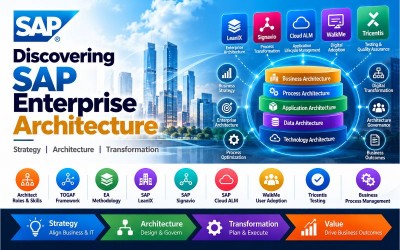
Discovering SAP Enterprise Architecture is a comprehensive enterprise training program designed for SAP Enterprise Architects, Solution Architects, Business Architects, Application Architects, Technology Architects, SAP Consultants, Digital Transformation Leaders, IT Managers, Business Transformation Professionals, and SAP Partners who want to understand enterprise architecture principles and implement SAP's Enterprise Architecture methodology for driving business transformation.

This course provides practical knowledge of SAP Enterprise Architecture, Enterprise Architecture Methodology, TOGAF, SAP Enterprise Architecture Framework, SAP LeanIX, SAP Signavio, SAP Cloud ALM, WalkMe, Tricentis, Business Capability Modeling, Business Process Management (BPM), and Business Transformation Management.

Following SAP's official Learning Journey, the course progresses from understanding the role of an Enterprise Architect, enterprise architecture frameworks, SAP Enterprise Architecture methodology, business transformation management, and business process management for enterprise architects.

Enterprise Architecture is a strategic discipline that aligns business strategy with information technology to enable innovation, improve operational efficiency, and support continuous business transformation. SAP Enterprise Architecture provides organizations with proven methodologies, frameworks, and tools that help design, govern, and optimize enterprise landscapes while supporting digital transformation initiatives.

This course introduces the complete lifecycle of SAP Enterprise Architecture, including the strategic role of Enterprise Architects, architecture competencies, SAP Enterprise Architecture Framework, TOGAF adaptation, SAP Enterprise Architecture Methodology, SAP LeanIX, SAP Signavio, SAP Cloud ALM, WalkMe, Tricentis, business transformation management, and business process management.

Throughout the course, learners will gain practical knowledge of how Enterprise Architects align IT with business strategy, model business capabilities, optimize enterprise applications, manage transformation initiatives, and govern enterprise architecture using SAP's recommended frameworks and tools.

By the end of this course, participants will possess the practical skills required to support enterprise architecture initiatives and prepare for SAP Enterprise Architecture-related certifications and transformation projects.

Who Should Attend

  • SAP Enterprise Architects
  • SAP Solution Architects
  • Business Architects
  • Technology Architects
  • Application Architects
  • SAP Consultants
  • Enterprise Architects
  • Business Transformation Managers
  • IT Architects
  • SAP Technical Consultants
  • Digital Transformation Leaders
  • Enterprise IT Managers
  • SAP Partners
  • Cloud Architects
  • Business Process Consultants

Skills You Will Gain

  • SAP Enterprise Architecture
  • Enterprise Architecture Methodology
  • TOGAF Framework
  • SAP Enterprise Architecture Framework
  • SAP LeanIX
  • SAP Signavio
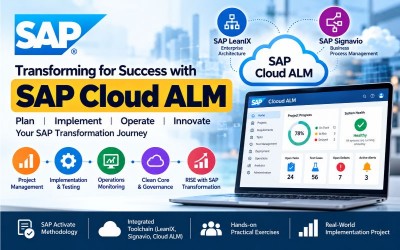
  • SAP Cloud ALM
  • WalkMe
  • Tricentis
  • Business Capability Modeling
  • Enterprise Transformation
  • Business Architecture
  • Solution Architecture
  • Business Process Management
  • Business Transformation Management
  • Enterprise Governance

Career Opportunities

  • SAP Enterprise Architect
  • SAP Solution Architect
  • Business Architect
  • Technology Architect
  • Application Architect
  • Enterprise Transformation Consultant
  • SAP Digital Transformation Consultant
  • SAP Business Architect
  • Enterprise Architecture Consultant
  • SAP Advisory Consultant
  • IT Strategy Consultant
  • Enterprise Governance Consultant
  • Business Process Architect
  • Cloud Enterprise Architect
  • SAP Chief Enterprise Architect

These roles are in high demand across manufacturing, banking, retail, healthcare, telecommunications, public sector, logistics, energy, pharmaceuticals, and multinational enterprises undergoing digital transformation.

Certification Preparation

This course is designed to support learners preparing for SAP Enterprise Architecture learning and certification by covering the concepts included in SAP's official Learning Journey.

Participants will gain practical knowledge in:

  • SAP Enterprise Architecture
  • Enterprise Architecture Methodology
  • TOGAF
  • SAP Enterprise Architecture Framework
  • SAP LeanIX
  • SAP Signavio
  • SAP Cloud ALM
  • WalkMe
  • Tricentis
  • Business Capability Modeling
  • Business Transformation Management
  • Business Process Management

The course combines architectural concepts with practical SAP enterprise architecture methodologies to prepare learners for enterprise transformation initiatives.

What will i learn?

  • Understand the strategic role of an SAP Enterprise Architect.
  • Explain enterprise architecture concepts.
  • Apply SAP Enterprise Architecture Methodology.
  • Understand SAP's adaptation of the TOGAF framework.
  • Explore SAP Enterprise Architecture Framework.
  • Use SAP LeanIX, Signavio, Cloud ALM, WalkMe, and Tricentis.
  • Understand Business Transformation Management.
  • Manage Business Process Management (BPM) initiatives.

Requirements

  • Basic SAP knowledge
  • Understanding of business processes
  • Basic IT architecture concepts
  • Interest in enterprise transformation
  • Computer or Laptop
  • Stable Internet Connection
  • SAP Learning System Access (Recommended)
  • SAP LeanIX Trial (Optional)
  • SAP Signavio Trial (Optional)

Frequently asked question

Yes. The course starts with the fundamentals of Enterprise Architecture and gradually progresses to SAP Enterprise Architecture frameworks, methodologies, and business transformation concepts.

No. Basic SAP and IT knowledge is recommended, but the course introduces Enterprise Architecture from the fundamentals.

Yes. The course provides comprehensive coverage of SAP Enterprise Architecture Methodology, its structure, purpose, architecture artifacts, and iterative development process.

Yes. You will learn SAP's adaptation of the TOGAF Architecture Development Method (ADM), its benefits, and how it integrates with SAP Enterprise Architecture practices.

Yes. The course introduces SAP LeanIX, SAP Signavio, SAP Cloud ALM, WalkMe, and Tricentis, explaining their primary functions within enterprise architecture and transformation programs.

Yes. You will learn how SAP Business Transformation Management tools support architecture-led transformation initiatives and enterprise change programs.

Yes. The course covers Business Process Management concepts, business process structures, and how Enterprise Architects manage and optimize business processes within SAP environments.

You will gain practical knowledge in Enterprise Architecture planning, business capability modeling, SAP Enterprise Architecture Methodology, TOGAF adaptation, SAP architecture tools, business transformation management, and business process governance.

  • Lesson 01 00:00:00
    Module 1 Overview

    Enterprise Architects play a strategic role in aligning business strategy with technology, enabling organizations to achieve transparency, innovation, and continuous transformation. Beyond technical expertise, Enterprise Architects require strong leadership, communication, collaboration, and business acumen to successfully design enterprise-wide solutions and guide digital transformation initiatives.

    This module introduces the profession of an architect, the strategic role of Enterprise Architects, different architecture roles, essential competencies, business value drivers, T-shaped and I-shaped expertise, organizational challenges, and integrated solution areas within SAP Enterprise Architecture.

    By the end of this module, learners will understand the responsibilities, competencies, and strategic importance of Enterprise Architects and how architecture supports enterprise transformation.

    According to the SAP Learning Journey, this module covers the strategic role of Enterprise Architects, architecture competencies, architect roles, T-shaped and I-shaped expertise, organizational challenges, and integrated solution areas.

    What You Will Learn

    • Understand the profession of an Enterprise Architect.
    • Differentiate architecture roles.
    • Evaluate Enterprise Architect competencies.
    • Understand business value drivers.
    • Explain T-shaped and I-shaped expertise.
    • Align IT with business strategy.
    • Address enterprise architecture challenges.
    • Support enterprise transformation initiatives.

    Units in This Module

    • Unit 1.1: Introducing the Profession of an Architect
    • Unit 1.2: Discovering Differences in the Architect Role in the Market
    • Unit 1.3: Determining an Enterprise Architect's Competencies and Business Value
  • Lesson 02 00:00:00
    1.1 Introducing the Profession of an Architect

    Enterprise Architects provide strategic direction by aligning business goals with enterprise technology. Participants will explore the profession of architecture, understand the responsibilities of Enterprise Architects, and learn how architects support business transformation and enterprise innovation.

    Key Topics

    • Enterprise Architect
    • Business Strategy
    • IT Strategy
    • Digital Transformation
    • Enterprise Architecture
    • Strategic Planning
    • SAP Enterprise Architecture
    • Business Alignment
  • Lesson 03 00:00:00
    1.2 Discovering Differences in the Architect Role in the Market

    Modern enterprises require different types of architects, each specializing in specific domains such as business, solution, application, technology, or enterprise architecture. Learners will understand the responsibilities, scope, and collaboration between various architect roles.

    Key Topics

    • Enterprise Architect
    • Solution Architect
    • Business Architect
    • Application Architect
    • Technology Architect
    • Cloud Architect
    • Architecture Roles
    • Enterprise Governance
  • Lesson 04 00:00:00
    1.3 Determining an Enterprise Architect's Competencies and Business Value

    Successful Enterprise Architects combine technical knowledge, strategic thinking, leadership, communication, and business expertise to create value across organizations. Participants will explore Enterprise Architect competencies, business value drivers, organizational challenges, and the importance of T-shaped and I-shaped expertise.

    Key Topics

    • Enterprise Architect Competencies
    • Business Value
    • Leadership Skills
    • Strategic Thinking
    • T-Shaped Expertise
    • I-Shaped Expertise
    • Organizational Challenges
    • Business Transformation

  • Lesson 01 00:00:00
    Module 2 Overview

    The SAP Enterprise Architecture Methodology provides a structured approach for aligning business strategy, enterprise capabilities, business processes, applications, data, and technology landscapes. It enables Enterprise Architects to design transformation roadmaps, govern enterprise architecture, and support sustainable business innovation using SAP's architecture framework and best practices.

    This module introduces the SAP Enterprise Architecture Methodology, SAP's adaptation of the TOGAF Architecture Development Method (ADM), architecture viewpoints, architecture artifacts, architecture governance, iterative development, and the SAP Enterprise Architecture Framework.

    By the end of this module, learners will be able to understand SAP Enterprise Architecture Methodology, apply architecture principles, develop enterprise architecture artifacts, and support enterprise transformation initiatives.

    According to the SAP Learning Journey, this module covers SAP Enterprise Architecture Methodology, TOGAF adaptation, architecture development methodology, iterative development, viewpoints, artifacts, and the SAP Enterprise Architecture Framework.

    What You Will Learn

    • Understand SAP Enterprise Architecture Methodology.
    • Explain SAP's adaptation of TOGAF.
    • Explore Architecture Development Methodology.
    • Understand iterative architecture development.
    • Apply enterprise architecture viewpoints.
    • Create architecture artifacts.
    • Understand architecture governance.
    • Use the SAP Enterprise Architecture Framework.

    Units in This Module

    • Unit 2.1: Introducing SAP Enterprise Architecture Methodology
    • Unit 2.2: Understanding SAP's Adaptation of TOGAF
    • Unit 2.3: Exploring the Architecture Development Methodology
    • Unit 2.4: Understanding the Iterative Development Process
    • Unit 2.5: Exploring Architecture Viewpoints and Artifacts
    • Unit 2.6: Understanding the SAP Enterprise Architecture Framework
  • Lesson 02 00:00:00
    2.1 Introducing SAP Enterprise Architecture Methodology

    SAP Enterprise Architecture Methodology provides a structured framework for designing, governing, and evolving enterprise architecture throughout business transformation initiatives. Participants will explore its purpose, implementation approach, and strategic value.

    Key Topics

    • SAP Enterprise Architecture Methodology
    • Enterprise Architecture
    • Architecture Principles
    • Architecture Governance
    • Enterprise Transformation
    • SAP Framework
    • Strategic Planning
    • Business Alignment
  • Lesson 03 00:00:00
    2.2 Understanding SAP's Adaptation of TOGAF

    SAP adapts the TOGAF Architecture Development Method (ADM) to support SAP-centric enterprise transformation initiatives. Learners will understand how TOGAF principles integrate with SAP methodologies, governance models, and architecture practices.

    Key Topics

    • TOGAF
    • Architecture Development Method (ADM)
    • SAP TOGAF Adaptation
    • Enterprise Architecture
    • Architecture Governance
    • Architecture Lifecycle
    • SAP Methodology
    • Digital Transformation
  • Lesson 04 00:00:00
    2.3 Exploring the Architecture Development Methodology

    The Architecture Development Methodology provides a structured process for planning, designing, implementing, and governing enterprise architecture. Participants will explore architecture phases, deliverables, governance checkpoints, and implementation planning.

    Key Topics

    • Architecture Development
    • Enterprise Architecture Lifecycle
    • Architecture Planning
    • Solution Design
    • Architecture Roadmap
    • Governance Framework
    • Business Transformation
    • SAP Enterprise Architecture
  • Lesson 05 00:00:00
    2.4 Understanding the Iterative Development Process

    Enterprise Architecture is an iterative process that continuously evolves as business strategies, technologies, and organizational priorities change. Learners will understand iterative architecture development, continuous improvement, and architecture lifecycle management.

    Key Topics

    • Iterative Development
    • Continuous Improvement
    • Enterprise Lifecycle
    • Architecture Evolution
    • Agile Architecture
    • Enterprise Transformation
    • Digital Innovation
    • SAP Architecture
  • Lesson 06 00:00:00
    2.5 Exploring Architecture Viewpoints and Artifacts

    Architecture viewpoints provide different perspectives for analyzing enterprise architecture, while architecture artifacts document architecture decisions, models, standards, and implementation guidance. Participants will explore common architecture viewpoints and artifact management.

    Key Topics

    • Architecture Viewpoints
    • Architecture Artifacts
    • Business Architecture
    • Application Architecture
    • Data Architecture
    • Technology Architecture
    • Architecture Documentation
    • Enterprise Modeling
  • Lesson 07 00:00:00
    2.6 Understanding the SAP Enterprise Architecture Framework

    The SAP Enterprise Architecture Framework organizes architecture domains, governance, business capabilities, transformation planning, and enterprise technology landscapes into a unified architecture model supporting digital transformation initiatives.

    Key Topics

    • SAP Enterprise Architecture Framework
    • Architecture Domains
    • Business Capabilities
    • Enterprise Governance
    • Transformation Planning
    • Technology Landscape
    • SAP Enterprise Architecture
    • Business Transformation

  • Lesson 01 00:00:00
    Module 3 Overview

    Business Transformation Management (BTM) enables organizations to successfully plan, govern, and execute transformation initiatives by aligning business strategy, enterprise architecture, business processes, applications, and technology. SAP Business Transformation Management combines methodologies, governance, collaboration, and intelligent business process analysis to help organizations achieve sustainable digital transformation.

    This module introduces Business Transformation Management, SAP Business Transformation Management solutions, SAP LeanIX, SAP Signavio, SAP Cloud ALM, WalkMe, Tricentis, business capability modeling, transformation roadmaps, and architecture-driven transformation governance.

    By the end of this module, learners will be able to understand Business Transformation Management, evaluate SAP transformation tools, build transformation roadmaps, manage enterprise capabilities, and support business-led digital transformation initiatives.

    According to the SAP Learning Journey, this module covers SAP Business Transformation Management, SAP LeanIX, SAP Signavio, SAP Cloud ALM, WalkMe, Tricentis, business capability modeling, and enterprise transformation governance.

    What You Will Learn

    • Understand Business Transformation Management (BTM).
    • Explain the SAP Business Transformation Management portfolio.
    • Explore SAP LeanIX.
    • Understand SAP Signavio.
    • Use SAP Cloud ALM for transformation projects.
    • Understand WalkMe and Tricentis.
    • Develop business capability models.
    • Build enterprise transformation roadmaps.

    Units in This Module

    • Unit 3.1: Introducing Business Transformation Management
    • Unit 3.2: Exploring SAP Business Transformation Management Solutions
    • Unit 3.3: Understanding SAP LeanIX
    • Unit 3.4: Exploring SAP Signavio
    • Unit 3.5: Understanding SAP Cloud ALM, WalkMe, and Tricentis
    • Unit 3.6: Building Business Capability Models and Transformation Roadmaps
  • Lesson 02 00:00:00
    3.1 Introducing Business Transformation Management

    Business Transformation Management provides organizations with structured approaches to align strategy, business capabilities, enterprise architecture, and technology investments while supporting continuous digital innovation and organizational change.

    Key Topics

    • Business Transformation Management
    • Enterprise Transformation
    • Digital Transformation
    • Strategic Planning
    • Business Capabilities
    • Enterprise Architecture
    • SAP Transformation
    • Governance
  • Lesson 03 00:00:00
    3.2 Exploring SAP Business Transformation Management Solutions

    SAP Business Transformation Management brings together a portfolio of integrated solutions that help organizations analyze business processes, manage enterprise architecture, govern implementations, improve user adoption, and ensure quality throughout transformation initiatives.

    Key Topics

    • SAP Business Transformation Management
    • SAP LeanIX
    • SAP Signavio
    • SAP Cloud ALM
    • WalkMe
    • Tricentis
    • SAP Business Suite
    • Enterprise Transformation
  • Lesson 04 00:00:00
    3.3 Understanding SAP LeanIX

    SAP LeanIX provides Enterprise Architecture Management capabilities that help organizations maintain transparency across business capabilities, applications, technologies, and IT landscapes while supporting architecture governance and transformation planning.

    Key Topics

    • SAP LeanIX
    • Enterprise Architecture Management
    • Application Portfolio Management
    • Technology Portfolio
    • Business Capabilities
    • Architecture Governance
    • IT Landscape
    • Enterprise Planning
  • Lesson 05 00:00:00
    3.4 Exploring SAP Signavio

    SAP Signavio enables organizations to model, analyze, optimize, and monitor business processes while supporting process excellence, collaboration, and continuous improvement throughout digital transformation initiatives.

    Key Topics

    • SAP Signavio
    • Business Process Management
    • Process Modeling
    • Process Analysis
    • Process Mining
    • Process Optimization
    • Collaboration
    • Continuous Improvement
  • Lesson 06 00:00:00
    3.5 Understanding SAP Cloud ALM, WalkMe, and Tricentis

    SAP Cloud ALM, WalkMe, and Tricentis provide complementary capabilities for application lifecycle management, digital user adoption, implementation monitoring, automated testing, and quality assurance across SAP transformation programs.

    Key Topics

    • SAP Cloud ALM
    • WalkMe
    • Tricentis
    • Application Lifecycle Management
    • User Adoption
    • Automated Testing
    • Quality Assurance
    • SAP Cloud Solutions
  • Lesson 07 00:00:00
    3.6 Building Business Capability Models and Transformation Roadmaps

    Business capability models provide a structured representation of organizational capabilities, while transformation roadmaps help Enterprise Architects prioritize initiatives, align investments with business strategy, and guide enterprise-wide transformation programs.

    Key Topics

    • Business Capability Modeling
    • Capability Maps
    • Transformation Roadmap
    • Strategic Planning
    • Enterprise Architecture
    • Portfolio Planning
    • Business Strategy
    • Digital Transformation

  • Lesson 01 00:00:00
    Module 4 Overview

    Business Process Management (BPM) is a core discipline within Enterprise Architecture that focuses on designing, documenting, analyzing, improving, and governing business processes. Effective BPM enables organizations to optimize operations, improve customer experiences, standardize processes, and support continuous business transformation.

    This module introduces Business Process Management concepts, business process architecture, process governance, process modeling, process analysis, process improvement, SAP Signavio Process Manager, process performance measurement, and continuous process optimization.

    By the end of this module, learners will be able to model business processes, establish process governance, analyze process performance, and implement process improvement initiatives using SAP Business Process Management practices.

    According to the SAP Learning Journey, this module covers Business Process Management concepts, process structures, process governance, and business process architecture.

    What You Will Learn

    • Understand Business Process Management (BPM).
    • Explain business process architecture.
    • Model enterprise business processes.
    • Establish process governance.
    • Analyze business process performance.
    • Identify process improvement opportunities.
    • Support continuous process optimization.
    • Align business processes with enterprise architecture.

    Units in This Module

    • Unit 4.1: Understanding Business Process Management
    • Unit 4.2: Exploring Business Process Structures
    • Unit 4.3: Governing Business Processes
  • Lesson 02 00:00:00
    4.1 Understanding Business Process Management

    Business Process Management provides a structured approach to managing, optimizing, and governing business processes throughout an organization. Participants will understand BPM principles and its role within Enterprise Architecture.

    Key Topics

    • Business Process Management
    • Process Architecture
    • Process Governance
    • Process Lifecycle
    • Enterprise Processes
    • Business Operations
    • Continuous Improvement
    • SAP Enterprise Architecture
  • Lesson 03 00:00:00
    4.2 Exploring Business Process Structures

    Business process structures organize enterprise activities into standardized workflows that improve operational efficiency, business alignment, and governance across the organization.

    Key Topics

    • Business Process Structure
    • Process Hierarchy
    • Value Streams
    • Business Activities
    • Process Documentation
    • Enterprise Modeling
    • Workflow Design
    • Process Standardization
  • Lesson 04 00:00:00
    4.3 Governing Business Processes

    Process governance ensures that business processes remain standardized, compliant, measurable, and continuously improved throughout enterprise transformation initiatives.
    Key Topics

    • Process Governance
    • Compliance
    • Process Ownership
    • Process Standards
    • Process Policies
    • Governance Framework
    • Continuous Monitoring
    • Business Excellence

  • Lesson 01 00:00:00
    Practical Exercises

    Throughout this course, learners will complete hands-on exercises using SAP Enterprise Architecture Methodology, SAP LeanIX, SAP Signavio, SAP Cloud ALM, WalkMe, Tricentis, and enterprise architecture best practices to gain practical experience in designing, governing, and managing enterprise transformation initiatives.
    Participants will perform the following practical activities:

    • Identify Enterprise Architect responsibilities
    • Compare different architecture roles
    • Assess Enterprise Architecture competencies
    • Explore SAP Enterprise Architecture Methodology
    • Apply SAP's adaptation of TOGAF
    • Create enterprise architecture viewpoints
    • Develop architecture artifacts
    • Build architecture governance models
    • Design business capability maps
    • Analyze enterprise application landscapes
    • Explore SAP LeanIX
    • Model business processes using SAP Signavio
    • Develop enterprise transformation roadmaps
    • Evaluate SAP Business Transformation Management solutions
    • Configure SAP Cloud ALM for architecture governance
    • Explore WalkMe digital adoption strategies
    • Understand Tricentis testing capabilities
    • Create business process structures
    • Establish process governance
    • Analyze process improvement opportunities
    • Support enterprise architecture decision-making
    • Align business strategy with enterprise architecture
    • Plan digital transformation initiatives
  • Lesson 02 00:00:00
    Enterprise Architecture Capstone Project

    Designing an Enterprise Architecture Transformation Roadmap

    In this capstone project, learners will develop a complete Enterprise Architecture transformation strategy for a fictional enterprise undergoing digital transformation using SAP Enterprise Architecture principles and SAP Business Transformation Management solutions.

    Participants will define business capabilities, evaluate the current IT landscape, build an enterprise architecture model, create transformation roadmaps, establish governance frameworks, optimize business processes, and recommend SAP solutions that support long-term enterprise modernization.

    The project follows the complete SAP Learning Journey for Discovering SAP Enterprise Architecture.

    Phase 1 – Enterprise Assessment

    Analyze:

    • Business Strategy
    • Enterprise Goals
    • Business Drivers
    • Current IT Landscape
    • Enterprise Challenges
    • Architecture Maturity
    • Business Capabilities
    • Stakeholder Requirements

    Phase 2 – Enterprise Architecture Design

    Develop:

    • Enterprise Architecture Vision
    • Business Capability Map
    • Business Architecture
    • Application Architecture
    • Data Architecture
    • Technology Architecture
    • Architecture Principles
    • Enterprise Roadmap

    Phase 3 – Business Transformation Planning

    Implement:

    • Transformation Strategy
    • SAP LeanIX Assessment
    • SAP Signavio Process Analysis
    • Application Portfolio Review
    • Technology Rationalization
    • Architecture Governance
    • Transformation Initiatives
    • Business Case Development

    Phase 4 – Business Process Management

    Create:

    • Business Process Architecture
    • Process Hierarchy
    • Process Ownership Model
    • Governance Framework
    • Process Documentation
    • Continuous Improvement Plan
    • Performance Metrics
    • Compliance Framework

    Phase 5 – Transformation Governance

    Develop:

    • Enterprise Governance Model
    • SAP Cloud ALM Monitoring Strategy
    • WalkMe User Adoption Plan
    • Tricentis Testing Strategy
    • Architecture Review Board
    • Continuous Transformation Roadmap
    • Risk Management Plan
    • Enterprise Transformation Dashboard

    Expected Project Outcome

    Upon successful completion of this capstone project, learners will be able to:

    • Design enterprise architecture strategies.
    • Apply SAP Enterprise Architecture Methodology.
    • Use SAP's adaptation of TOGAF.
    • Build business capability models.
    • Develop enterprise architecture artifacts.
    • Create transformation roadmaps.
    • Utilize SAP LeanIX and SAP Signavio.
    • Establish architecture governance.
    • Implement Business Transformation Management.
    • Manage Business Process Management initiatives.
    • Support enterprise-wide digital transformation programs.

Jittesh Purrohit

Lectures

24

Skill level

Intermediate

Expiry period

Lifetime

Related courses