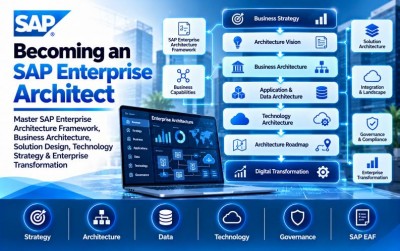
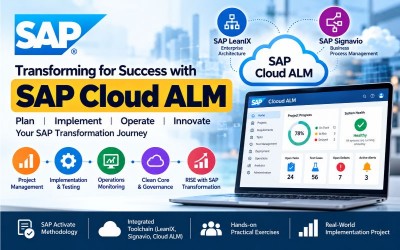
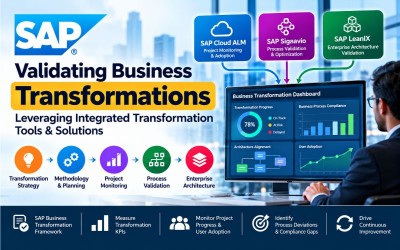
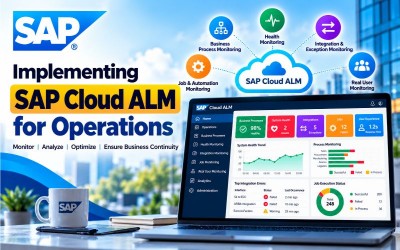
Becoming an SAP Enterprise Architect is a comprehensive professional training program designed for Enterprise Architects, SAP Solution Architects, IT Architects, Technology Consultants, Digital Transformation Leaders, SAP Technical Consultants, Business Architects, and SAP certification candidates.
This learning journey provides complete coverage of the SAP Enterprise Architecture Framework (SAP EAF), enabling learners to design enterprise architectures that align business objectives with IT strategies. Participants will learn architecture vision, business capability mapping, application architecture, data architecture, technology architecture, architecture governance, and roadmap planning for successful enterprise transformation initiatives.
Enterprise Architecture plays a critical role in aligning business strategy with technology investments. SAP Enterprise Architects help organizations create scalable, resilient, and future-ready enterprise landscapes while supporting digital transformation initiatives.
In this course, learners will explore the SAP Enterprise Architecture Framework, understand architecture engagement methodologies, create architecture visions based on business capabilities, design business, application, data, and technology architectures, and develop enterprise architecture roadmaps.
By the end of this course, learners will be able to create enterprise architecture strategies that support organizational goals while ensuring scalability, maintainability, governance, and business value across SAP landscapes.
Who Should Attend
- SAP Enterprise Architects
- SAP Solution Architects
- IT Architects
- Technical Architects
- Business Architects
- SAP Technical Consultants
- SAP Technology Consultants
- Enterprise Solution Designers
- Digital Transformation Consultants
- SAP Project Managers
- IT Managers
- Cloud Architects
- Technology Leaders
- Enterprise Strategy Consultants
- SAP Certification Candidates
Skills You Will Gain
- SAP Enterprise Architecture Framework (SAP EAF)
- Enterprise Architecture
- Architecture Vision
- Business Architecture
- Application Architecture
- Data Architecture
- Technology Architecture
- Architecture Governance
- Architecture Roadmaps
- SAP Reference Architecture
- Business Capability Modeling
- Solution Architecture
- Enterprise Transformation
- IT Strategy
- Digital Architecture
- Architecture Decision Making
- Enterprise Planning
- SAP Landscape Design
Career Opportunities
- SAP Enterprise Architect
- SAP Solution Architect
- Enterprise Solution Designer
- IT Architect
- Business Architect
- Technology Architect
- SAP Transformation Consultant
- Enterprise Strategy Consultant
- SAP Technical Architect
- Cloud Solution Architect
- Enterprise Integration Architect
- SAP Advisory Consultant
- Digital Transformation Lead
- Chief Enterprise Architect
- SAP Architecture Consultant