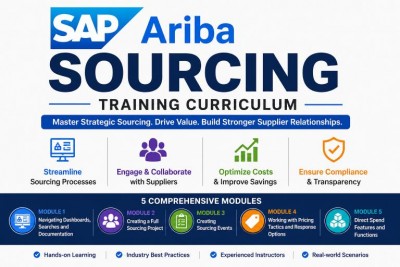
This
learning journey is designed for Business Users, Procurement Specialists,
Strategic Sourcing Professionals, and SAP Ariba Consultants who want to develop
practical expertise in SAP Ariba Sourcing. Throughout the course, participants
will explore the complete sourcing lifecycle, from navigating the platform and
creating sourcing projects to configuring sourcing events, implementing pricing
strategies, and leveraging direct spend capabilities.
By the end of this training, learners will possess the practical knowledge required to confidently manage sourcing projects, collaborate with suppliers, configure advanced sourcing events, and support digital procurement initiatives using SAP Ariba Sourcing.
This introductory module familiarizes learners with the SAP Ariba Sourcing interface and its core navigation features. Participants will learn how to efficiently access dashboards, locate sourcing projects, personalize workspace settings, configure notifications, and utilize the built-in documentation and help resources available within SAP Ariba.
What You Will Learn
After completing this course, you will be able to:
Learn how
to move through the SAP Ariba workspace, understand navigation menus, access
sourcing modules, and efficiently locate commonly used features for daily
procurement activities.
Understand dashboard components, project summaries, work queues, and reporting widgets while learning how dashboards provide visibility into sourcing activities and pending tasks.
Explore user profile settings, personalization options, dashboard customization, notification preferences, and delegation features that help create a productive working environment.
Discover the available learning resources, online documentation, knowledge articles, product guides, and support tools that assist users in resolving issues and learning new functionality.
This module provides comprehensive knowledge of creating and managing complete sourcing projects using SAP Ariba Sourcing. Learners will understand project planning, collaboration, task management, document organization, team administration, and sourcing request conversion within an enterprise procurement environment.
What You Will Learn
After completing this course, you will be able to:
Learn about the lifecycle of a sourcing project, workspace components, project phases, milestones, and collaboration tools available within SAP Ariba.
Understand project team structures, user roles, permissions, ownership assignments, and collaboration methods that support successful sourcing initiatives.
Explore different task types including approvals, reviews, milestones, notifications, and workflow activities that help manage sourcing operations efficiently.
Learn how sourcing requests are initiated, reviewed, approved, and transformed into structured sourcing projects for supplier engagement.
Understand knowledge projects, reusable sourcing templates, best practice documentation, and standardized content that improves sourcing consistency across projects.
This module introduces learners to the complete process of designing, configuring, and managing sourcing events within SAP Ariba. Participants will create Requests for Information (RFI), Requests for Proposal (RFP), and auction-based events while configuring event rules, supplier participation, and evaluation criteria.
What You Will Learn
After
completing this course, you will be able to:
Gain an understanding of sourcing event categories, procurement scenarios, and selecting the appropriate event type for different purchasing requirements.
Learn how to create, configure, and manage various sourcing events while understanding the purpose and workflow of each event.
Explore bidding rules, scoring methods, currency settings, visibility options, timelines, and compliance configurations used during sourcing events.
Learn how suppliers, evaluators, observers, and internal stakeholders are invited and managed throughout the sourcing event lifecycle.
Develop structured sourcing content by creating sections, questionnaires, line items, pricing requirements, attachments, and evaluation criteria.
Understand multilingual event support, event summaries, resource management, and content review before publishing sourcing events.