Course description

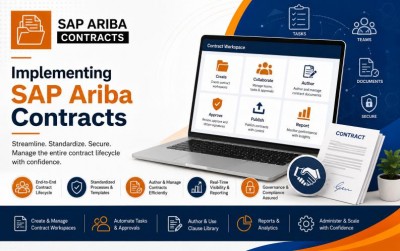
The Implementing SAP Ariba Contracts learning journey provides a comprehensive understanding of how SAP Ariba Contracts supports these activities within an integrated contract management environment.

Learners begin with the fundamentals of SAP Ariba Contracts and gradually progress into creating and publishing contract workspaces, managing amendments, administering templates, authoring contract documents, maintaining reusable clauses, running reports, and configuring administrative features.

The learning journey also covers SAP Ariba Strategic Sourcing administration, realm configuration, and the migration of legacy contracts into SAP Ariba Contracts. By the end of the program, learners will understand both the day-to-day contract management processes and the administrative capabilities required to support a structured SAP Ariba Contracts implementation. 

Who Should Attend?

This learning journey is suitable for professionals involved in implementing, administering, or using SAP Ariba contract and sourcing solutions.

It is particularly relevant for:

  • SAP Ariba Consultants
  • SAP Ariba Contracts Consultants
  • Contract Managers
  • Procurement Professionals
  • Contract Administrators
  • SAP Ariba System Administrators
  • Strategic Sourcing Professionals
  • Procurement Transformation Consultants
  • Solution Architects
  • Legal Operations Professionals
  • Source-to-Contract Implementation Teams
  • Business Users responsible for contract lifecycle activities

Key Learning Outcomes

After completing Implementing SAP Ariba Contracts, learners will be able to:

  • Explain SAP Ariba Contracts features, capabilities, and lifecycle processes.
  • Create, prepare, approve, and publish contract workspaces.
  • Manage contract amendments and termination scenarios.
  • Configure and administer Contract Workspace Templates.
  • Work with teams, tasks, documents, conditions, and workflows.
  • Author structured contract documents.
  • Create and maintain reusable contract clauses.
  • Use the Clause Library to support standardized contract language.
  • Run and work with SAP Ariba reports.
  • Manage Strategic Sourcing project templates.
  • Understand users, groups, suppliers, organizations, and administrative settings.
  • Configure important elements of a Source-to-Contract realm.
  • Understand integration and reporting administration.
  • Prepare and migrate legacy contracts into SAP Ariba Contracts. 


What will i learn?

  • SAP Ariba Contracts
  • Contract Lifecycle Management
  • Contract Workspace Creation
  • Contract Amendments
  • Contract Workspace Templates
  • Project Template Administration
  • Contract Document Authoring
  • Microsoft Word-based Assembled Documents
  • Clause Library Management
  • Contract Tasks and Approval Workflows

Requirements

  • A basic understanding of procurement and sourcing processes.
  • Familiarity with contracts and contract lifecycle concepts.
  • Basic knowledge of supplier management.
  • General understanding of approval and business workflows.
  • Basic computer and web application skills.

Frequently asked question

This learning journey covers SAP Ariba Contracts from both a functional and administrative perspective. It begins with contract fundamentals and progresses into workspace creation, amendments, templates, document authoring, clause management, reporting, system administration, realm configuration, and legacy contract migration.

Yes. Learners explore creating and preparing contract workspaces, managing approvals and documents, publishing contracts, and handling amendments and termination scenarios. SAP's current documentation also describes creation, publication, amendment, hold, and closure as key contract workspace lifecycle activities.

Yes. Template administration is covered extensively. The learning journey includes SAP Ariba Contracts: Workspace Template Administration, Managing Project Templates, and Administering Contract Workspace Templates in SAP Ariba Contracts.

Yes. Learners explore assembled contract documents, formatting and loading documents, and managing reusable contract clauses. SAP's current documentation confirms that assembled documents can contain sections and clauses sourced from the Clause Library, helping organizations standardize approved contract language.

Yes. The curriculum includes a dedicated SAP Ariba Strategic Sourcing: System Administration module that covers users, groups, supplier management, site administration, customization, projects, integration, reports, notifications, and commodity codes. It also includes a separate module covering new realm configuration.

Yes. Module 12: Uploading Legacy Contracts in SAP Ariba Contracts covers import capabilities and constraints, preparation of contract data and documents, and the actual legacy contract import process. SAP's current documentation confirms that the legacy import functionality is intended for moving existing agreements from other repositories into SAP Ariba Contracts.

The introductory module specifically identifies administrators, architects, business users, and consultants as relevant learners. More broadly, the complete learning journey is well suited to contract managers, procurement professionals, SAP Ariba consultants, system administrators, sourcing teams, and professionals involved in Source-to-Contract implementations.

  • Lesson 01
    Course Description

    This module introduces SAP Ariba Contracts and establishes the foundation for the complete learning journey.

    Learners will explore the purpose of the solution, understand its key capabilities and business benefits, and become familiar with the processes supported throughout the contract lifecycle.

    The module is particularly useful for administrators, architects, business users, and consultants who need a clear understanding of how SAP Ariba Contracts helps organizations standardize contract activities and improve visibility and control. 

    Summary:

    What You Will Learn

    After completing this module, you will be able to:

    • Understand the purpose of SAP Ariba Contracts.
    • Recognize its key features and business capabilities.
    • Explain how SAP Ariba supports contract lifecycle processes.
    • Understand the role of contract workspaces.
    • Recognize opportunities to improve contract standardization and governance.
    • Understand how different users participate in contract management processes.
  • Lesson 02
    Unit 1: Introducing SAP Ariba Contracts

    Build a clear foundation in SAP Ariba Contracts and understand how the solution supports structured contract management.

    Learners will become familiar with the role of contract workspaces, documents, tasks, teams, and other important elements used to manage contracts throughout their lifecycle.

  • Lesson 03
    Unit 2: Recognizing Benefits and Capabilities of SAP Ariba Contracts

    Explore the business value of managing contracts through a centralized digital environment.

    This unit helps learners understand how SAP Ariba Contracts can support standardized processes, collaboration, visibility, controlled contract authoring, and better governance across procurement and contracting activities.

  • Lesson 04
    Unit 3: Exploring SAP Ariba Contracts Processes

    Understand how the major SAP Ariba Contracts activities connect across the contract lifecycle.

    Learners will explore the journey from contract creation and preparation through approval, publication, amendment, and ongoing management.

  • Lesson 01
    Course Description

    Contract workspaces are at the heart of contract management in SAP Ariba.

    This module guides learners through the process of creating, preparing, and publishing contract workspaces. Participants will learn how workspace teams, documents, tasks, approvals, and signatures work together to create a controlled and repeatable contracting process.

    SAP documentation confirms that contract workspaces move through defined lifecycle stages, including draft, publication, amendment, hold, and closure.

    Summary:

    What You Will Learn

    • Understand the purpose and structure of contract workspaces.
    • Create contract workspaces using appropriate templates.
    • Prepare workspace teams, tasks, and documents.
    • Coordinate review and approval activities.
    • Understand contract signature processes.
    • Prepare a contract workspace for publication.
    • Manage workspace activities using SAP Ariba best practices. 
  • Lesson 02
    Unit 1: Introducing Contract Workspaces

    Understand what a contract workspace is and why it serves as the central working area for contract-related activities.

    Learners will explore important workspace components such as overview information, teams, documents, tasks, contract metadata, and supporting information.

  • Lesson 03
    Unit 2: Preparing Contract Workspaces

    Learn how to prepare a contract workspace before the agreement is finalized.

    This includes working with team members, managing documents, coordinating tasks, and ensuring that required reviews and approvals are completed before publication.

  • Lesson 04
    Unit 3: Publishing Contract Workspaces

    Explore the steps required to move a contract workspace from preparation into a published state.

    Learners will understand how publishing affects the workspace and why controlled publication is important for maintaining reliable contract records.

  • Lesson 01
    Course Description

    Contracts frequently need to change after they have been executed. Business requirements may evolve, pricing may change, terms may need revision, or an agreement may need to be terminated.

    This module explains how published contract workspaces are amended within SAP Ariba Contracts and how amendments fit into the broader contract lifecycle.

    SAP confirms that a published contract workspace must generally be amended before its content can be changed, providing controlled management of post-publication modifications. 

  • Lesson 02
    Unit 1: Amending Contracts

    Learn how amendments are used to make controlled changes to published contracts.

    Learners will understand amendment concepts, amendment types, and how changes are introduced without losing visibility into the contract's previous state.

  • Lesson 03
    Unit 2: Terminating Contracts

    Explore how contract termination is managed when an agreement needs to end before its expected lifecycle is complete.

    The unit helps learners understand the administrative considerations involved in closing or terminating contract relationships while maintaining an accurate contract record.

  • Lesson 01
    Course Description

    Templates are essential for creating consistent contract processes across an organization.

    This module teaches learners how to create, configure, maintain, publish, and upgrade Contract Workspace Templates. Participants will explore teams, documents, tasks, conditions, workflows, and version control.

    SAP describes contract workspace templates as the framework that defines workspace structure, documents and tasks, team roles and approvals, and default rules and settings. 

  • Lesson 02
    Unit 1: Introducing and Creating the Templates Project

    Understand the purpose of workspace templates and learn how template projects provide a standardized starting point for new contracts.

  • Lesson 03
    Unit 2: Creating Teams

    Learn how teams and roles are configured within templates so that the right participants can automatically become involved in contract activities.

  • Lesson 04
    Unit 3: Using Documents

    Explore how standard documents, supporting materials, and contract content can be incorporated into templates to improve consistency.

  • Lesson 05
    Unit 4: Implementing Simple Tasks

    Learn how tasks can be configured to guide users through required contract activities, reviews, approvals, and other responsibilities

  • Lesson 06
    Unit 5: Understanding Conditions

    Understand how conditions can make templates more dynamic by determining when specific content, groups, documents, or activities should be included

  • Lesson 07
    Unit 6: Using Tasks with Workflow

    Explore more advanced task configurations and understand how workflows help coordinate approvals and other contract activities.

  • Lesson 08
    Unit 7: Publishing and Version Control and Upgrading Templates

    Learn how templates are published and maintained over time. Understand version control and how updated templates can support evolving business requirements.

  • Lesson 01
    Course Description

    This module introduces contract document authoring in SAP Ariba Contracts, including assembled contract documents and Microsoft Word-based authoring processes.

    SAP Ariba supports assembled documents containing sections and reusable clauses, helping organizations create more structured and standardized agreements. 

  • Lesson 02
    Unit 1: Defining Contract Authoring

    Understand contract authoring concepts and how SAP Ariba supports the creation of structured contract documents using standardized content.

  • Lesson 03
    Unit 2: Formatting Assembled Documents

    Learn how assembled contract documents can be formatted using Microsoft Word styles to create professional, consistent agreements.

  • Lesson 04
    Unit 3: Loading Assembled Documents

    Explore how prepared assembled documents are loaded into SAP Ariba Contracts and made available for subsequent contract authoring and management activities.

  • Lesson 01
    Course Description

    The Clause Library provides a centralized location for maintaining reusable contract language.

    This module teaches learners how to create, organize, update, publish, and leverage clauses for contract authoring and reporting.

    SAP describes the Clause Library as a central repository for reusable contract clauses that helps organizations maintain consistency and use approved legal language across agreements. 

  • Lesson 02
    Unit 1: Introducing the Clause Library

    Understand the purpose and structure of the Clause Library and how standardized clauses can improve consistency across contract documents.

  • Lesson 03
    Unit 2: Managing the Clause Library

    Learn how clauses can be created, organized, imported, exported, updated, published, and versioned. 
    Learners will also understand how maintaining a structured clause repository can support legal governance and efficient contract authoring.

  • Lesson 04
    Unit 3: Leveraging the Clause Library

    Explore how approved clauses can be reused within contract documents to accelerate authoring and maintain consistency.

    Learners will understand how standardized, alternate, and fallback language can support different contracting scenarios.

  • Lesson 01
    Course Description

    Reporting provides visibility into contract and sourcing activities and helps teams make better-informed decisions.

    This module introduces SAP Ariba's prepackaged reporting capabilities and teaches learners how to run, save, and share reporting information. 

  • Lesson 02
    Unit 1: Working with Reports

    Learn how to access and run reports, work with reporting information, save useful report configurations, and share relevant insights with stakeholders.

    The unit helps learners understand how reporting can support operational monitoring and business decision-making.

  • Lesson 01
    Course Description

    This module expands template administration knowledge into SAP Ariba Strategic Sourcing project templates.

    Learners will understand template types, administrative responsibilities, workflow structures, groups, documents, tasks, approval rules, helper files, and conditions that help simplify project creation.

    SAP's current official course also emphasizes template workflows, template types, administration activities, approvals, document choices, and smart documents. 

  • Lesson 02
    Unit 1: Introducing Project Templates within SAP Ariba Strategic Sourcing

    Understand how project templates provide reusable structures for sourcing and contract-related projects.

  • Lesson 03
    Unit 2: Organizing Project Templates and Template Administration Access

    Learn how templates are organized and how administrative access can be controlled.

  • Lesson 04
    Unit 3: Creating and Revising Project Templates

    Explore how administrators create new templates, revise existing templates, and maintain them as business requirements evolve

  • Lesson 05
    Unit 4: Organizing Template Groups and Team Members

    Learn how project groups and team roles can be structured within templates.

  • Lesson 06
    Unit 5: Reviewing Tasks and Approval Rules within Templates

    Understand how tasks and approval rules help automate project governance and ensure required activities are completed.

  • Lesson 07
    Unit 6: Establishing Documents within Project Templates

    Explore how documents and supporting resources can be incorporated into project templates.

  • Lesson 08
    Unit 7: Creating and Applying Template Questions and Conditions

    Learn how questions and conditions can dynamically influence project behavior and create more flexible templates.

  • Lesson 01
    Course Description

    This module introduces the administrative capabilities required to support SAP Ariba Strategic Sourcing environments.

    Learners will explore users and groups, organizations, suppliers, site management, customization, projects, integrations, reporting, notifications, and commodity codes. 

  • Lesson 02
    Units Covered

    Unit 1: Introducing Administration

    Understand the responsibilities and tools involved in administering SAP Ariba Strategic Sourcing.

    Unit 2: Discovering User Management

    Learn how users and groups are created, searched, organized, and managed to provide appropriate system access.

    Unit 3: Understanding Supplier Management

    Explore administrative concepts related to supplier and organization information.

    Unit 4: Reviewing Site Management

    Understand important site-level settings and administrative activities that support the SAP Ariba environment.

    Unit 5: Discovering Customization Management

    Explore how fields and other configurable elements can be adjusted to support organizational requirements.

    Unit 6: Exploring Project Management

    Learn about administrative project-management capabilities, including activities that affect multiple projects.

    Unit 7: Understanding Integration and Report Management

    Understand integration concepts, external ERP considerations, data movement, and reporting administration.

    Unit 8: Reviewing Event and Commodity Code Management

    Explore event notification templates and commodity code administration used to support sourcing processes.

  • Lesson 01
    Course Description

    This module focuses specifically on configuring templates used to create SAP Ariba contract workspaces.

    Learners will review existing template structures and then progress into creating templates that support standardized contract processes. 

  • Lesson 02
    Units Covered

    Unit 1: Reviewing Contract Templates

    Explore the structure and purpose of contract templates and understand how their components influence newly created contract workspaces.

    Unit 2: Creating Contract Templates

    Learn how to create and configure contract workspace templates that reflect organizational contracting processes, roles, documents, tasks, and governance requirements.

  • Lesson 01
    Course Description

    This module introduces the administrative activities involved in configuring a new realm within the SAP Source to Contract environment.

    Learners progress through architecture and deployment concepts before exploring data imports, users, groups, commodity codes, currencies, suppliers, system parameters, custom fields, and dashboards. 

  • Lesson 02
    Units Covered

    Unit 1: Describing Realm Architecture and Suite Integration

    Understand realm architecture and how different SAP Ariba Source-to-Contract components work together.

    Unit 2: Identifying Deployment Methodologies, Personas, and Scope

    Explore implementation approaches, important user personas, and how project scope influences configuration.

    Unit 3: Administering Imports and Exports

    Learn how data is moved into and out of the environment to support configuration and administration.

    Unit 4: Maintaining User Data and User Licenses

    Understand how user records and licensing information are maintained.

    Unit 5: Administering Group Assignments

    Learn how groups are assigned and maintained to support permissions and responsibilities.

    Unit 6: Exploring Commodity Codes and Commodity Code Manager

    Understand commodity code structures and how Commodity Code Manager supports classification.

    Unit 7: Administering Currency Conversions

    Explore currency conversion administration for global sourcing and contracting scenarios.

    Unit 8: Creating Supplier and Participant

    Learn how supplier and participant information is established for use within relevant processes.

    Unit 9: Setting up Parameters from Intelligent Configuration Manager

    Understand how configurable parameters influence system functionality and business behavior.

    Unit 10: Exploring Custom Fields

    Learn how custom fields can extend standard information structures to address organization-specific requirements.

    Unit 11: Administering Dashboards

    Explore dashboard administration and how users can be provided with relevant information and access points.

  • Lesson 01
    Course Description

    Organizations moving to SAP Ariba Contracts may already have large volumes of agreements stored in previous systems or repositories.

    This module teaches learners how to prepare and migrate those legacy contracts into SAP Ariba Contracts while understanding import requirements and limitations.

    SAP confirms that legacy contracts can be imported from other repositories into contract workspaces, with contract information prepared in the required format and appropriate project templates established beforehand. 

  • Lesson 02
    Units Covered

    Unit 1: Understanding Import Capabilities and Constraints

    Understand what the legacy contract import process supports, the requirements that must be met, and the limitations that should be considered before beginning a migration.

    Unit 2: Preparing Contract Data and Documents

    Learn how existing contract information and associated documents should be organized and prepared before import.

    This stage is important for improving data quality and reducing migration issues.

    Unit 3: Importing Legacy Contracts

    Explore the process of loading prepared legacy contracts into SAP Ariba Contracts and reviewing the results of the import.

    Learners will understand how imported agreements become part of the centralized contract repository.

Jittesh Purrohit

Lectures

45

Skill level

Beginner

Expiry period

Lifetime

Related courses